The UK has a serious problem with leadership and sustainable construction where flood defence is concerned. There is a profound lack of critical thinking in the delivery of future UK flood defences and an unwillingness by agencies to get their hands dirty at a local level. As a consequence government continues to fail regarding sustainability and value for money; taxpayer funded agencies seem unable or unwilling to work together. It is a situation compounded by wildlife and environmental organisations who have seen an opportunity to gain control of and modify land in much the same way that monasteries such as Glastonbury once did.
Flood defence schemes are invariably seen in terms of a definable project that can be closed rather than the first step of a sustainable long term solution. The protected community needs to live with and manage these schemes for 100’s of years after they are built. Our thinking on delivery is just too short and too expensive when it is a 300 year or so problem and especially when the initial solution only has a 100 year design life; it makes little sense. There is an obvious gap. That gap means that today’s options should at least consider what happens next. Should we really be adopting a solution today requiring the construction of a replacement barrier tomorrow rather than a scheme today that has provision or a plan for extending it already built in? Our current scheme takes planned obsolescence to a new level.
We should not be closing out future options for the generations that follow and we should follow our own rules for sustainable development
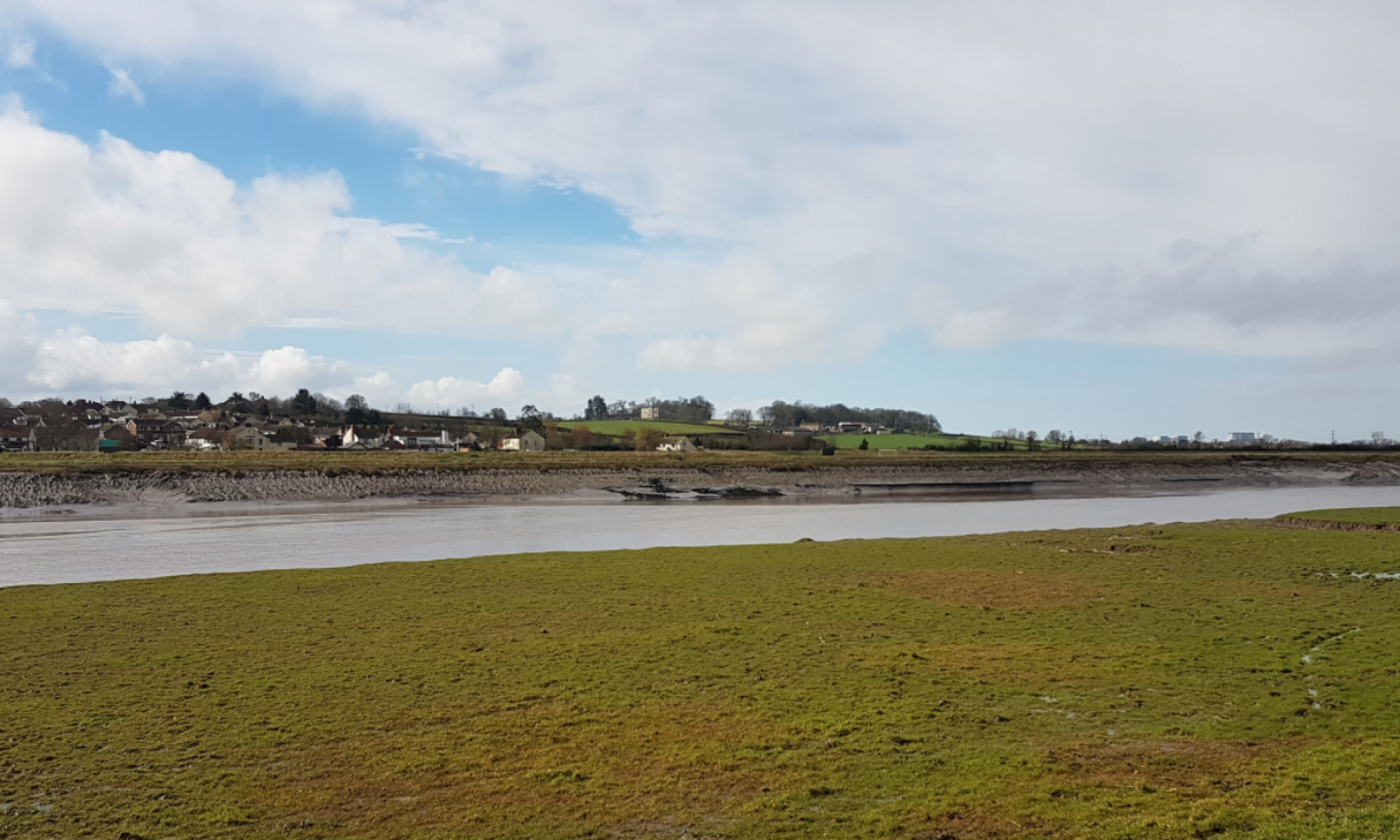
Delivery of the Bridgwater Tidal Barrier continues to be an exemplar of non-sustainable thinking. Part of the scheme requires the river banks between the tidal barrier and the village of Combwich to be maintained. The EA’s plan to do this work as part of the barrier construction contract. Material is to be dug from the adjacent protected fields and where a future Northern Bridgwater Bypass might be routed. Sedgemoor District Council (SDC) have protected in the Local Plan a potential crossing point on the River Parrett just south of the A38 roundabout at Dunball.
Clearly excavating Chilton Trinity’s fields and creating a series of salt water pits that creates an ideal future breeding ground for salt marsh breeding mosquito’s is not what people have considered the consequence to be. It is far from impossible that in a generation Chilton Trinity and Combwich may ultimately become uninhabitable because of this excavation process rather than from the increased flood risk. Managing mosquito borne diseases may well become the larger challenge in low lying areas as our climate warms up. It is difficult to see how the EA could contemplate the creation of such a situation.
With whole life costs of the Bridgwater Tidal Barrier reaching £100M for a barrier, secondary banks and the raised river banks; banks that need continual raising means we need to consider modification of the delivery model to get the costs of this project under control.
That whole life cost also ignores the 100 year economic impact, both locally and nationally, of losing 1000’s of acres of productive agricultural land notwithstanding the questionable morality of a food importing country choosing to export more of its food production offshore.
If we are going to build the solution we have we need better and more economic delivery solutions than is currently proposed. We can then at least ameliorate the present situation with a better delivery system.
Brexit allows the modification of the EU water and waste directives that have now been written into UK law. We can now change the way in which we manage waste for the better.
Sustainable Construction
Every year Sedgemoor will build 5-600 houses and the excavation of foundations and drains for each of these houses will create around 15-20m3 of waste material (clay) suitable for re use as bank raising fill material. Sedgemoor’s planned housing developments will create around 9,000m3 per year that currently must be paid for to be disposed of. Housing developers could supply all the material needed to raise the banks. That is sustainable construction.
Over the 100 years life of the barrier there could be as much as 900,000 m3 of material we need to find a home for; material that could be used to build up the banks and preserve the land we have at Chilton Trinity for future generations. Even if the volume is only 10% of the possible amount its probably enough to avoid digging up land at Chilton Trinity.
Under present EA proposals the EA is going to pay landowners for material that other organisations with similar material must pay to dispose of. We are meant to be reducing this sort of activity not making the situation worse.
We simply don’t need to get all the work in place in 2024; we need just enough to maintain the flood defence need and then use local resources to progressively deliver the longer-term solution with a local benefit to the economy. This work could be collectively done by local contractors under the supervision of either the EA or the Drainage Board. There is simply no engineering need for the EA to wantonly and unnecessarily destroy our landscape when cheaper and more sustainable alternatives are available.
NB there is only an intent to continue to raise the river banks
To put this into perspective that recycled material would
- build a bank 5m high bank from the Bridgwater Tidal Barrier to Combwich.
- raise the banks and build the secondary flood defences up to match climate change.
- raise the banks, build the secondary flood defence and start building new defences north from Pawlett Hill towards Highbridge.

Sea Level Rise
Sea level rise is not expected to slow for at least 300 years making both the barrier redundant as the river banks can only be raised perhaps another metre before they overload the poor ground conditions of the Parrett Estuary. Ultimately the long term plan for Chilton Trinity and Pawlett Hams’s will be realised.
The continued conditioning of the population by the EA to passively accept surrender to the sea as the first option for non-London areas of the UK is disingenuous and defeatist and never mind its land we need to grow food on.
Way Forward
At £100M the present solution for the Bridgwater Tidal barrier is clearly neither sustainable or affordable. A situation that needs to be laid at the door of the Government, Somerset Rivers Authority and specifically the EA and Sedgemoor District Council (SDC) who provide joint project oversight. We need
- Sustainability in what we do is placed at the centre of our plans
- An independent inquiry into how flood defence is being delivered in Somerset.
- A peer review of the BTB project into how it has arrived where it has.


You must be logged in to post a comment.